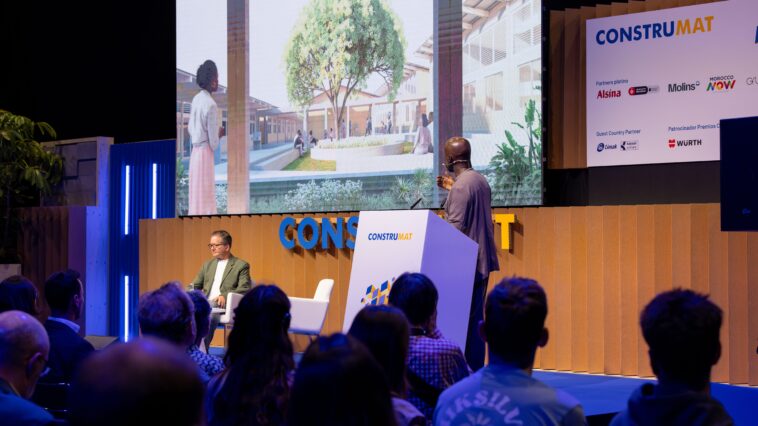
Earlier this year, we had the opportunity to attend Construmat 2025 in Barcelona — one of Spains’s most important events for the architecture, construction, and design industries.
From conversations on immersive design to the growing role of sustainability in materials and existing challenges, Construmat 2025 wasn’t just another trade fair — it was a real look into how our industry is evolving. We came back with fresh ideas, new connections, and a strong sense that the future of visualization is more collaborative and responsible than ever before.


1. Sustainability Was at the Core of Every Conversation
The central theme of Construmat 2025 was clear: the sustainable transformation of construction. Nearly every booth, talk, and demo touched on reducing environmental impact, optimizing resources, or improving energy efficiency. We saw how digital design tools — from BIM platforms to real-time visualization software — are becoming key players in helping architects and builders design more responsibly.
For us, sustainability isn’t just a technical checkbox — it’s part of how design tells a story about the future. Seeing companies focus on circular materials, modular systems, and energy-efficient design processes was both motivating and aligned with our own philosophy of blending innovation with environmental awareness.
- Smart and circular materials were everywhere — showing how the industry is moving toward reuse and longevity.
- Digital twins and data-driven models are helping predict performance and maintenance from the earliest design stages.
- Technology with purpose — tools that enhance creativity while promoting sustainable outcomes — stood out the most.
Construmat’s focus on sustainability felt authentic and forward-thinking — not just as a theme, but as a call for change. It’s encouraging to see digital design taking a real role in that transformation.
2. Immersive Design Is Becoming Known
We noticed how immersive visualization is more and more becoming a new tool to consider in the building and architectural workflows. For us, it was great to see more studios embracing this mindset.
This trend resonates deeply with our mission at CroqWorks: helping architects and real estate professionals not just visualize their projects, but let others experience them. The shift from static renders to immersive storytelling isn’t just technological — it’s emotional. It changes how people connect with architecture.
- Real-time visualization tools like Unreal Engine and Twinmotion were everywhere, proving their growing role in the industry.
- Collaborative design reviews in VR are now common, helping teams make decisions faster and more intuitively.
- Immersion as communication — walking through a design builds understanding far beyond traditional drawings or 3D images.
3. A Community Pushing Boundaries
One of the best parts of attending Construmat 2025 was the people. We met inspiring architects, software developers, researchers, and fellow 3D artists who are all experimenting with new ways to connect design, construction, and experience. Many of our conversations revolved around finding balance — between realism and creativity, speed and craftsmanship, and technology and practicality.
Events like this remind us why we love what we do.
Looking Ahead
Thank you to everyone we met and shared conversations with in Barcelona — it was a pleasure connecting with such a passionate community. We’re already looking forward to returning for Construmat 2027!
